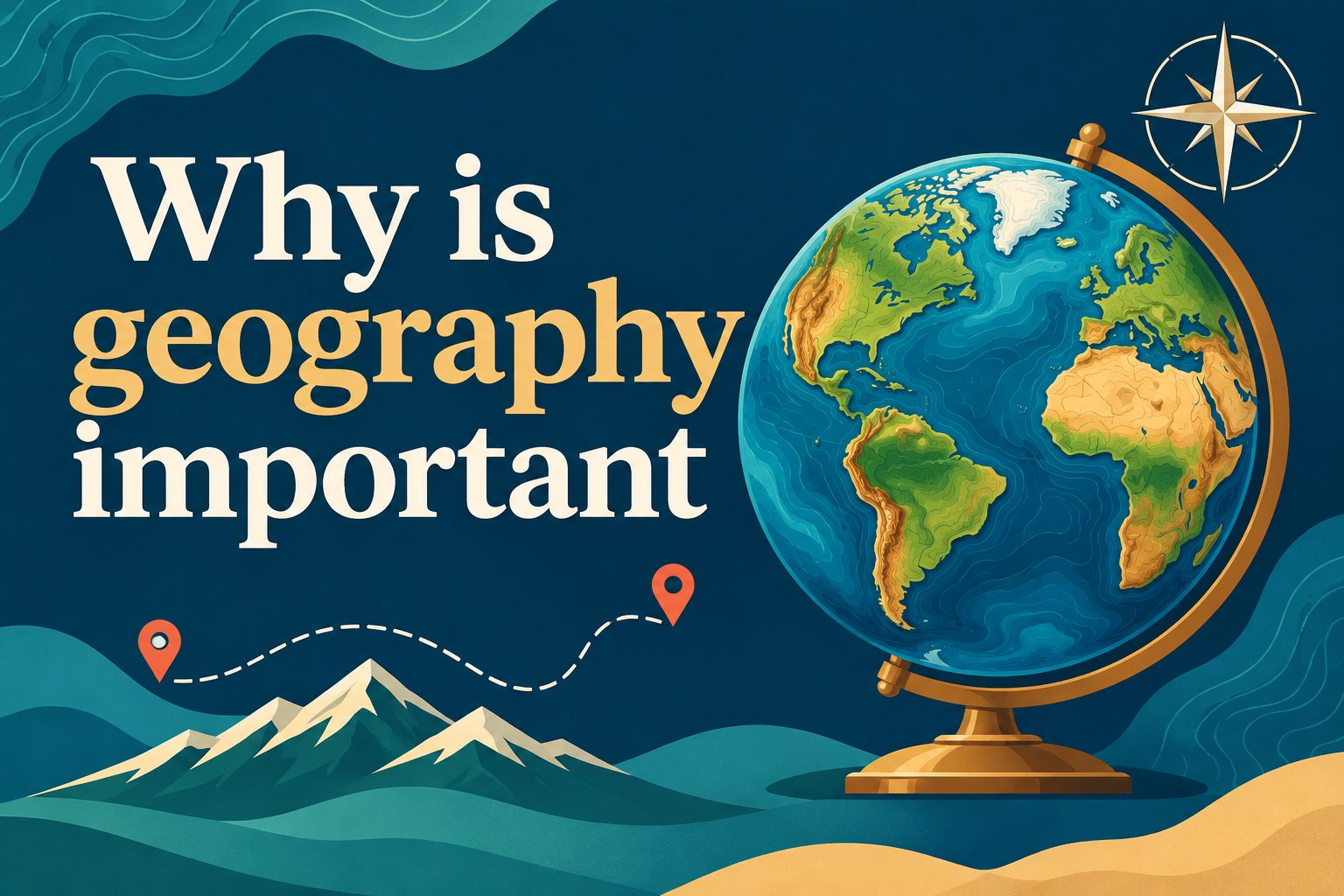
Geography is important because it helps us make sense of the world and our place in it. It explains where people live, how environments shape daily life, why cultures differ, and how places are connected through trade, travel, technology, and nature. From choosing a safe place to build a home to responding to climate change, geography gives people practical knowledge for better decisions. It is not only about memorizing countries, capitals, or map locations. Geography helps us see patterns, ask useful questions, and understand the relationship between people, places, and the environment. This article explores why geography matters in education, work, communities, and everyday life, along with practical examples, common mistakes, and useful ways to build stronger geographic awareness.
Why Geography Matters In Daily Life
Geography affects many choices people make without always noticing it. Weather forecasts, travel routes, housing prices, food availability, local jobs, and natural hazards are all connected to location. Knowing basic geography helps people read these conditions more clearly.
1. It Helps People Navigate Places
Geographic knowledge makes travel safer and more efficient. People use maps, landmarks, directions, and location tools to move through towns, cities, and unfamiliar regions. Navigation also helps emergency workers, delivery drivers, tourists, and commuters reach the right place at the right time.
2. It Explains Weather And Climate
Geography helps explain why one place is rainy, another is dry, and another has cold winters. Factors such as latitude, elevation, distance from the ocean, and mountain ranges influence local conditions. This knowledge helps people plan clothing, crops, travel, buildings, and outdoor activities.
3. It Builds Awareness Of Local Resources
Communities depend on nearby water, soil, forests, energy sources, roads, and services. Geography shows where these resources are located and how they are used. It also encourages people to think carefully about whether resources can meet future needs without causing unnecessary damage.
4. It Supports Better Travel Decisions
A trip involves more than choosing a destination. Travelers need to consider distance, terrain, weather, transport options, time zones, cultural expectations, and local safety conditions. Geographic thinking turns travel into a more informed experience and helps people respect the places they visit.
5. It Connects Food To Place
Food production depends heavily on geography. Climate, soil quality, water supply, and transportation affect what can be grown and how it reaches consumers. Learning this connection helps people appreciate farmers, recognize supply challenges, and make more informed choices about food systems.
6. It Helps People Prepare For Hazards
Floods, droughts, wildfires, storms, earthquakes, and landslides do not affect every location in the same way. Geography helps identify areas of risk and supports emergency planning. Families, businesses, and governments can use this knowledge to prepare rather than react too late.
Geography And The Relationship Between People And Places
Geography studies both the physical world and human activity. This broad view is valuable because people do not live separately from their surroundings. Every community adapts to its location while also changing it through farming, construction, industry, and conservation.
1. Landforms Shape Settlement Patterns
Rivers, coastlines, valleys, and flat land often attract settlements because they can provide water, transport, fertile soil, or room to build. Mountains, deserts, and dense forests may limit access. Geography explains why cities grow where they do and how landscapes influence development.
2. Culture Develops In Particular Settings
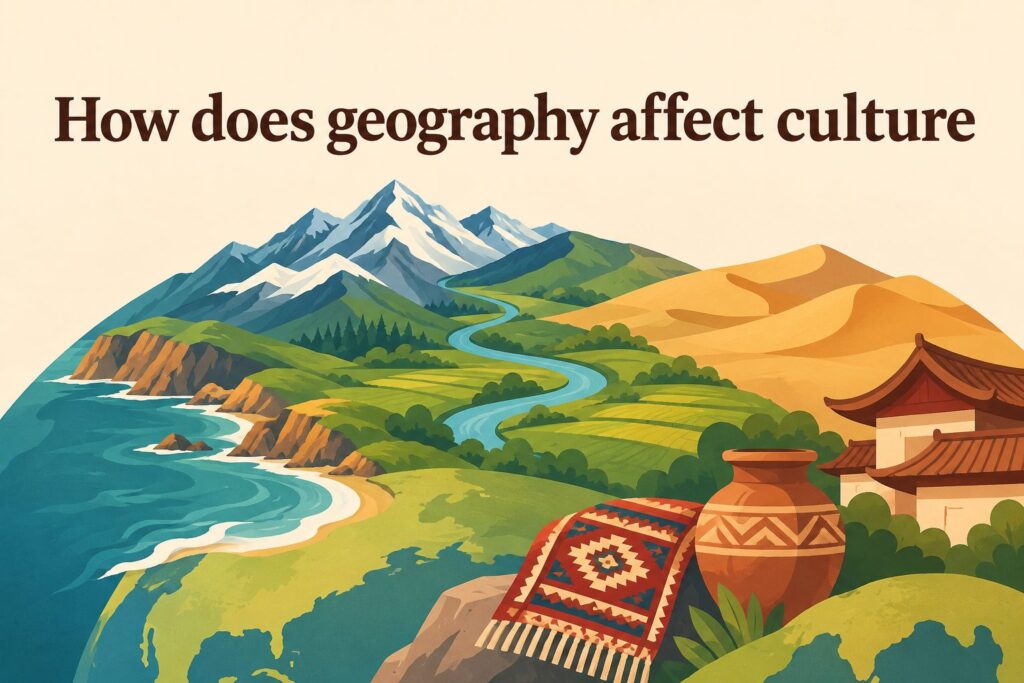
Language, traditions, architecture, clothing, and food often reflect local geography. Coastal communities may have strong fishing traditions, while mountain communities may develop different transport methods and building styles. Geography helps people see culture as a response to history, environment, and exchange.
3. Population Patterns Tell Important Stories
Geographers study where people live, why they move, and how populations change. Crowded cities may offer jobs and services, while rural areas may provide land and different lifestyles. These patterns affect schools, transport, health care, housing, and public planning.
4. Cities Depend On Nearby Regions
Cities rely on surrounding areas for food, water, labor, energy, and materials. Rural communities may depend on cities for markets, hospitals, education, and specialized services. Geography reveals these connections and shows why decisions in one place can affect people far beyond it.
5. Borders Influence Cooperation And Conflict
Political boundaries can shape laws, trade, movement, and access to resources. Geography does not treat borders as simple lines on a map. It considers how borders affect real people, including families, workers, businesses, and communities living near them.
6. Migration Changes Both Origin And Destination
People move for work, education, safety, family, or environmental reasons. Geography helps explain the push and pull factors behind migration. It also shows how migration can bring new skills, traditions, and challenges to both the places people leave and the places where they settle.
How Geography Supports Education
Geography gives students a framework for connecting knowledge from science, history, economics, civics, and culture. It develops curiosity while teaching learners to use evidence, compare places, and recognize that complex problems rarely have one simple cause.
1. It Improves Map And Data Skills
Students learn to read maps, scales, symbols, charts, satellite images, and population data. These skills are useful far beyond the classroom because modern life includes location-based information, visual data, and digital maps. Geography teaches people to question what information shows and what it leaves out.
2. It Strengthens Critical Thinking
Geographic questions encourage deeper thinking. Instead of asking only where something happens, students can ask why it happens there, who is affected, and what might change. This approach helps learners move beyond memorization and examine causes, consequences, and possible solutions.
3. It Makes History More Meaningful
Historical events happened in real places shaped by terrain, climate, resources, and routes. Geography helps explain why trade centers developed, why armies chose certain paths, and why groups competed for land or water. It adds context that makes history easier to interpret.
4. It Encourages Global Awareness
Students who learn geography can better understand other regions and perspectives. They see that communities may face different climates, opportunities, risks, and customs. This awareness builds empathy and reduces the tendency to judge unfamiliar places using only one’s own experience.
5. It Supports Science Learning
Physical geography connects directly to science topics such as ecosystems, erosion, water cycles, climate, earthquakes, and natural resources. It helps students see these subjects at a real-world scale. A river, coastline, forest, or weather system becomes easier to study when its location is considered.
6. It Prepares Students For Modern Careers
Many careers rely on geographic thinking, even when the job title does not include geography. Logistics, public health, urban planning, environmental work, tourism, marketing, engineering, and emergency management all use location-based data. Geographic literacy creates useful career flexibility.
Practical Uses Of Geography
Geography has value because it supports decisions in many fields. It turns location, movement, and environmental information into practical insight that organizations and individuals can use responsibly.
1. Urban Planning And Housing
Planners study land use, transport routes, population growth, flood risk, and access to services before building neighborhoods. Geographic information helps communities decide where homes, schools, parks, roads, and hospitals should be located. Good planning can improve quality of life and reduce future costs.
2. Business Location Decisions
Businesses use geography when choosing store locations, delivery zones, suppliers, and target markets. They consider population density, income patterns, transport access, competition, and local demand. A good location decision can make a business more convenient for customers and more sustainable over time.
3. Public Health Planning
Health agencies use geographic patterns to identify where disease outbreaks, limited health services, pollution, or food insecurity may be concentrated. Mapping these issues helps officials direct resources where they are needed most. Geography supports prevention as well as emergency response.
4. Environmental Protection
Conservation work depends on knowing where habitats, watersheds, endangered species, forests, and pollution sources are located. Geographic analysis can help protect sensitive areas while balancing human needs. It also helps communities measure how land-use changes affect ecosystems.
5. Disaster Response
During emergencies, responders need reliable information about roads, shelters, hazard zones, hospitals, and affected populations. Geography helps teams prioritize urgent needs and coordinate support. Accurate location data can save time, reduce confusion, and help reach vulnerable people more quickly.
6. Agriculture And Water Management
Farmers use geographic knowledge to match crops with soil, climate, rainfall, and terrain. Water managers study rivers, groundwater, rainfall patterns, and demand across regions. These decisions are increasingly important as weather conditions become less predictable in many places.
Key Benefits Of Geographic Thinking
Geographic thinking is a habit of noticing relationships between place, people, movement, and environment. It is valuable because it makes complex issues easier to organize and discuss.
- Better decision-making: Location-based information helps people compare options, identify risks, and plan with stronger evidence.
- Stronger environmental responsibility: Geography shows how everyday actions can affect water, land, air, habitats, and communities elsewhere.
- Greater cultural awareness: Learning about places helps people recognize diversity without reducing communities to stereotypes.
- Improved problem-solving: Geographic thinking connects different factors, such as transport, population, climate, and resources, when examining a problem.
- More informed citizenship: Voters and community members can better evaluate issues involving land use, infrastructure, borders, public services, and environmental policy.
- Useful digital skills: Modern mapping tools, location services, and data visualizations are easier to use wisely when people understand basic geographic concepts.
Common Geography Mistakes To Avoid
Geography is most useful when it is approached with curiosity and care. Simple mistakes can lead to inaccurate conclusions, unfair assumptions, or poor decisions.
1. Treating Geography As Map Memorization
Memorizing place names can be helpful, but it is only one small part of geography. A stronger approach asks how physical features, human activity, culture, and history shape each place. Facts become more meaningful when they are connected to real patterns and relationships.
2. Assuming Every Country Is The Same Inside
Countries contain many different regions, communities, climates, and experiences. Describing an entire nation as if every person lives the same way ignores this diversity. Geographic thinking encourages people to look at differences within places, not only differences between them.
3. Ignoring Scale
A problem that appears simple at a national level may look very different in a neighborhood or region. For example, a country may have enough water overall while certain communities still face shortages. Always consider whether local, regional, national, or global scale matters most.
4. Confusing Weather With Climate
Weather describes short-term conditions, while climate describes long-term patterns. One cold day does not disprove a warming trend, and one hot day does not define a climate. Geography helps people use the right evidence for the question being discussed.
5. Forgetting Human Impacts
Natural landscapes are important, but people also change land through farming, roads, mining, cities, and conservation. Ignoring human activity can create an incomplete picture. Good geographic analysis considers both natural processes and the choices people make.
6. Relying On One Map Or Data Source
Maps can emphasize certain features and leave out others. Data may be old, incomplete, or collected using different methods. Comparing reliable sources and checking context helps prevent misleading conclusions, especially when maps are used to support important decisions.
7. Using Stereotypes To Explain Places
It is easy to turn geographic information into broad assumptions about people. That approach is inaccurate and unfair. Culture and behavior are influenced by many factors, including history, family, economics, politics, and personal choices, not location alone.
Best Practices For Learning Geography
A practical approach makes geography more memorable and useful. The goal is not to know every fact immediately, but to build habits that help people notice patterns and ask better questions.
1. Start With Your Local Area
Explore the geography close to home first. Notice roads, rivers, hills, parks, land use, weather changes, and public services. Local examples make abstract concepts easier to grasp and show that geography is present in ordinary routines.
2. Use Maps With A Question In Mind
Instead of looking at a map passively, ask a question such as where people are concentrated, which routes cross a region, or where flooding may occur. A clear question helps people interpret maps thoughtfully instead of simply scanning symbols and colors.
3. Compare More Than One Place
Comparing places reveals useful similarities and differences. Two coastal cities may have different economies because of climate, infrastructure, history, or nearby resources. Comparison teaches people to avoid simple explanations and look for the factors that truly matter.
4. Connect News To Location
When reading about a storm, migration route, supply disruption, or drought, find the area on a map and consider its wider setting. Look at neighboring regions, major waterways, terrain, and transport links. This habit gives current events valuable geographic context.
5. Combine Physical And Human Evidence
A complete explanation often needs both physical and human geography. A drought may involve rainfall patterns, but its effects also depend on water policy, farming methods, infrastructure, and income. Combining evidence leads to more realistic conclusions.
6. Check Dates And Sources
Places change over time through new roads, population growth, environmental change, and political decisions. Use recent, credible information when examining geographic issues. Also ask who collected the data, why it was collected, and whether any groups may be underrepresented.
7. Respect Local Knowledge
People who live in an area often have valuable insight about seasons, hazards, travel, and community needs. Maps and data are powerful tools, but they should be considered alongside local experience. Respectful listening produces a more accurate and humane view of place.
Geography In A Changing World
Geography remains especially important as societies face linked global challenges. It helps people see that environmental, economic, and social issues often cross borders while still having different effects in different places.
Climate change affects regions in unequal ways because coastlines, rainfall, infrastructure, and income levels vary. Geographic knowledge helps identify where adaptation is most urgent and what solutions may fit local conditions.
Global supply chains show how closely places are connected. A disruption at a port, drought in a farming region, or conflict along a transport route can influence prices and availability far away. Geography makes these connections easier to trace.
Digital tools also make geographic literacy more valuable. People see maps, location services, satellite images, and local data every day. Knowing how to read them critically helps users avoid misinformation and make better choices.
As cities grow, geographic planning becomes essential for housing, transport, green space, water, and public health. Communities need decisions that consider both immediate needs and long-term resilience.
Finally, geography encourages balanced thinking. It reminds us that global problems are real, but solutions must often be adapted to particular places, people, resources, and conditions.
Frequently Asked Questions
1. What Is Geography In Simple Words
Geography is the study of places, people, environments, and the connections between them. It looks at natural features such as rivers and mountains, as well as human features such as cities, cultures, economies, and borders. It helps explain why places are different and how they influence one another.
2. Why Is Geography Important For Students
Geography helps students develop map skills, critical thinking, cultural awareness, and environmental knowledge. It connects subjects such as science, history, economics, and civics. Students also learn how real-world issues, including climate change, migration, and resource use, affect people differently depending on location.
3. Is Geography Only About Maps
No. Maps are important tools, but geography includes much more. It studies climate, landforms, populations, cultures, resources, cities, travel, trade, and environmental change. Geography uses maps to communicate information, but its main purpose is to explain patterns and relationships between people and places.
4. How Does Geography Help The Environment
Geography helps people identify ecosystems, pollution sources, water supplies, hazard zones, and land-use changes. This information supports conservation, disaster preparation, and sustainable planning. By showing how human activities affect different locations, geography helps communities make choices that protect natural systems and local livelihoods.
5. What Careers Use Geography
Geography is useful in urban planning, environmental science, logistics, public health, emergency management, education, tourism, agriculture, transport, business analysis, and government. Many of these careers use maps, population data, satellite information, or location-based planning to solve practical problems and improve services.
6. How Can I Improve My Geography Knowledge
Begin by exploring maps of your local area and asking questions about weather, land use, transport, and nearby resources. Follow world events with a map nearby, compare regions, and learn basic map-reading skills. The most effective approach is regular curiosity rather than trying to memorize everything at once.
Conclusion
Geography is important because it explains how people, places, and environments are connected. It supports practical decisions about travel, resources, health, education, business, safety, and environmental care. It also helps people interpret the world with more context and less assumption.
Learning geography does not require memorizing every place name. It begins with noticing patterns, asking why things happen where they do, and considering how one location affects another. Those habits make people better prepared to understand both their own communities and the wider world.
Discussion